HANDMADE CUSTOM-FIT HOLSTERS FOR ALMOST ANY GUN


.jpg&width=88&height=88&webp=1&type=cover)

.jpg&width=88&height=88&webp=1&type=cover)


.png&width=88&height=88&webp=1&type=cover)

.jpg&width=88&height=88&webp=1&type=cover)


.jpg&width=88&height=88&webp=1&type=cover)


What Makes a Good Holster? Design, Fit, and Geometry Explained
Holsters are interesting. Most shooters don’t delve deeply into holster construction, although they know what a good or bad holster is from experience. Holsters are made from leather or hard thermoplastic resins known as Kydex. Some feature a combination of the two materials. The design has continually been changed as we adapt to different types of handguns. Revolvers are still useful but most holsters are molded for automatic pistols. Optics ready holsters are a huge part of the market. Holsters are more complicated than a leather purse but similar in some ways as far as demands of fit and longevity go to a good pair of boots. Each has a welt, opening, and body and must be well put together. Each features a type of support structure. The holster, however, is a load bearing device.
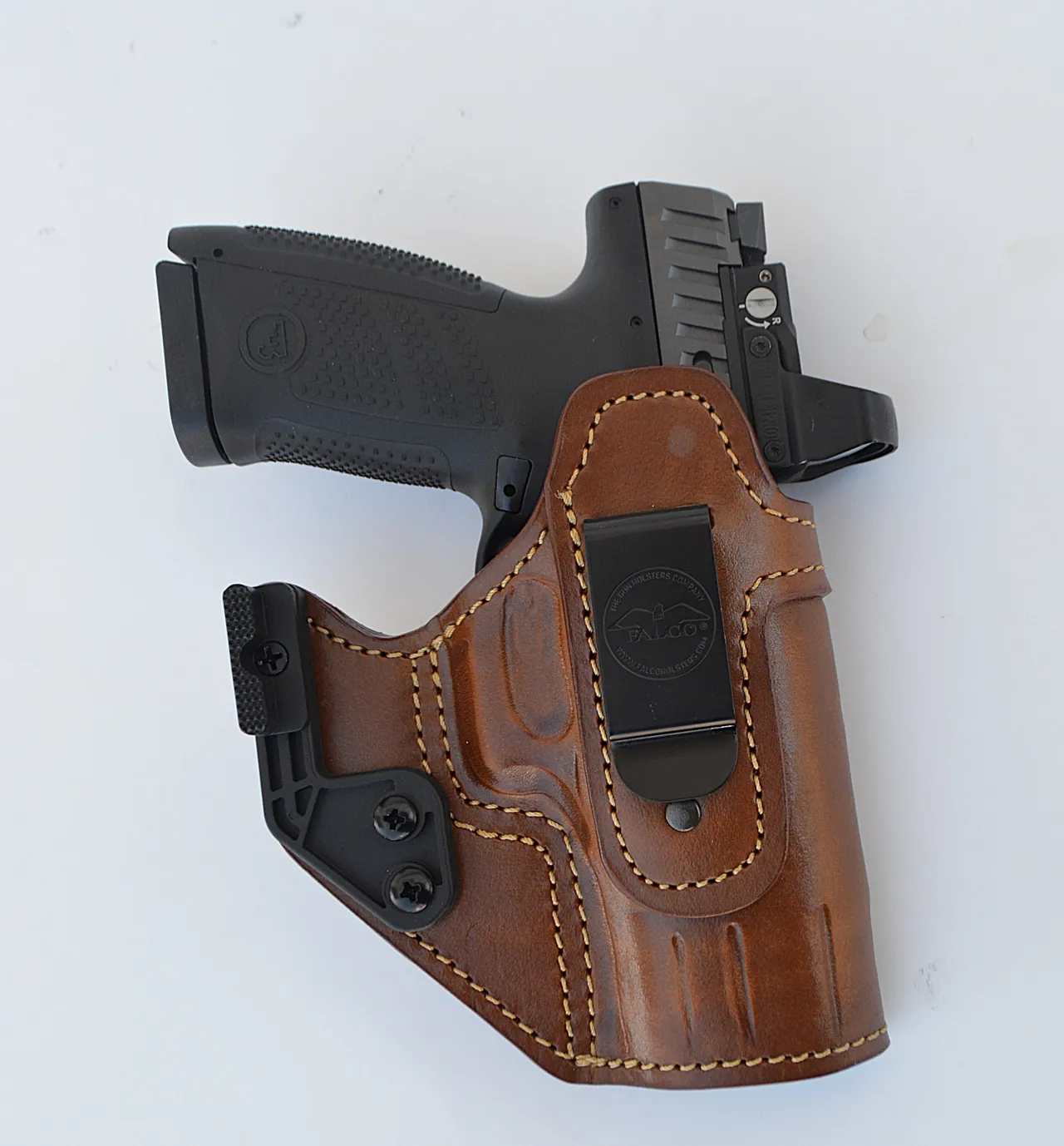
This is among the author’s favorite inside the waistband holsters. A great deal of design work went into this Falco holster.
There are many holsters available. This allows the shooters to select a product that fits their needs well. An appraisal of your needs will lead to a successful choice among many good holsters from Falco. Holsters begin life laid out like a dress pattern. The holster is sewn together and glued together. The two halves of a holster are sewn together then the edges are glued and sewn together in what is called edging. The edge of a good holster is so nicely put together that it appears seamless. Holsters also are held together by screws known as retention screws. The holster is blocked or molded for a single type of handgun.
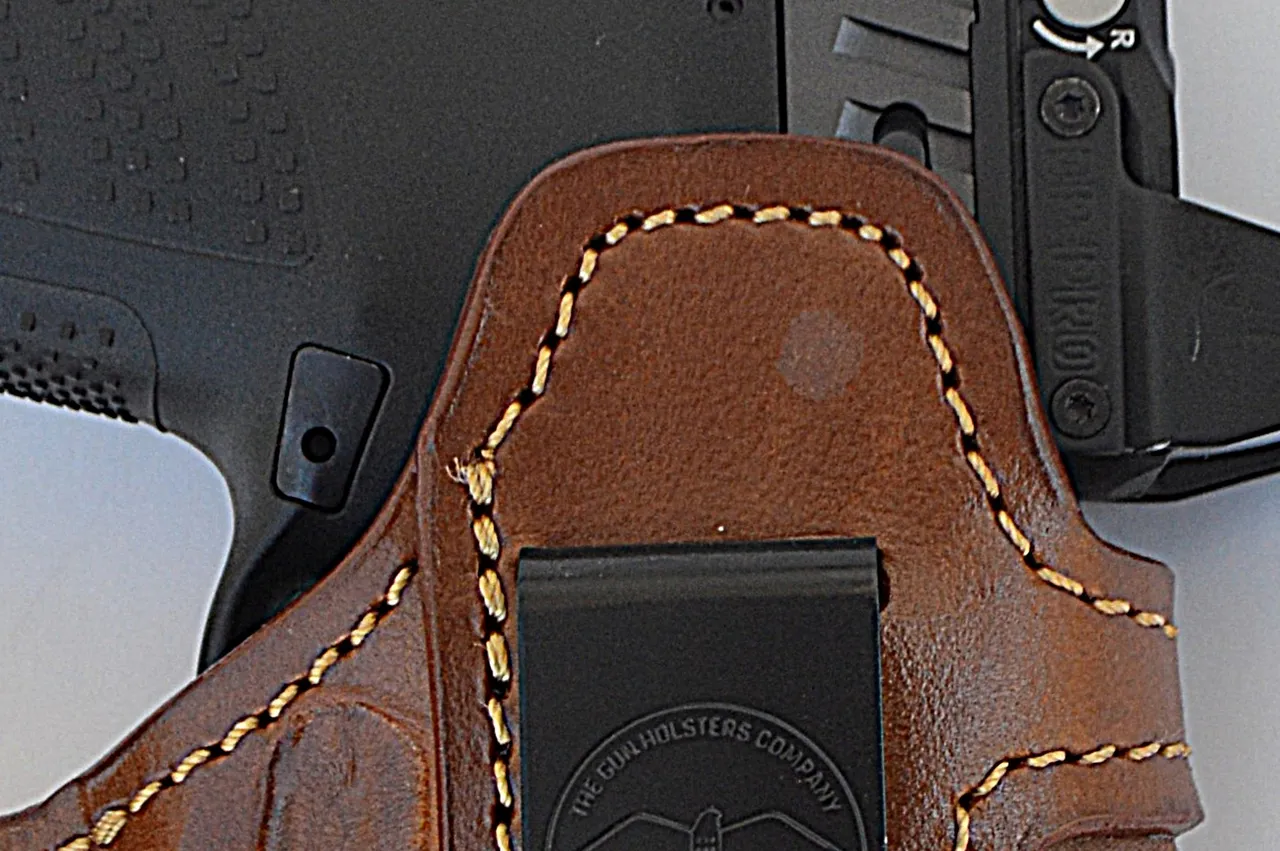
Note the sturdy, well-executed stitching on this Falco holster
As an example the Glock 17 may be the intended fit. The holster may be a type that carries a combat light and carry optic. Other holsters may be molded for the CZ P10 or other types. The holster attaches to the belt with loops. These may be single loops or double loops. A good strong design is the tunnel loop which is a long reinforced belt loop. While the belt loop’s primary job is to cinch the holster tightly to the belt the holster’s belt loops also keep the holster close to the body to aid concealed carry. Inside the waistband holsters may feature belt loops, a single or double loop, or strong steel spring clips that take a hard hold on the belt. An important part of the holster is the spine. This is the primary support of the holster. It may be on either side of the holster body and is a reinforced section that helps the holster keep its shape. This is often a thick and strong part of the holster. It isn’t unusual for the spine to be reinforced. The holster mouth or holster welt is the reinforced section where the handgun is placed into the holster. This section must be reinforced for a good solid fit. When the handgun is drawn the holster mouth must not collapse. This allows the handgun to be re-holstered easily. The holstering welt must be reinforced properly. A design such as the inside the waistband places greater demands on the holstering welt.
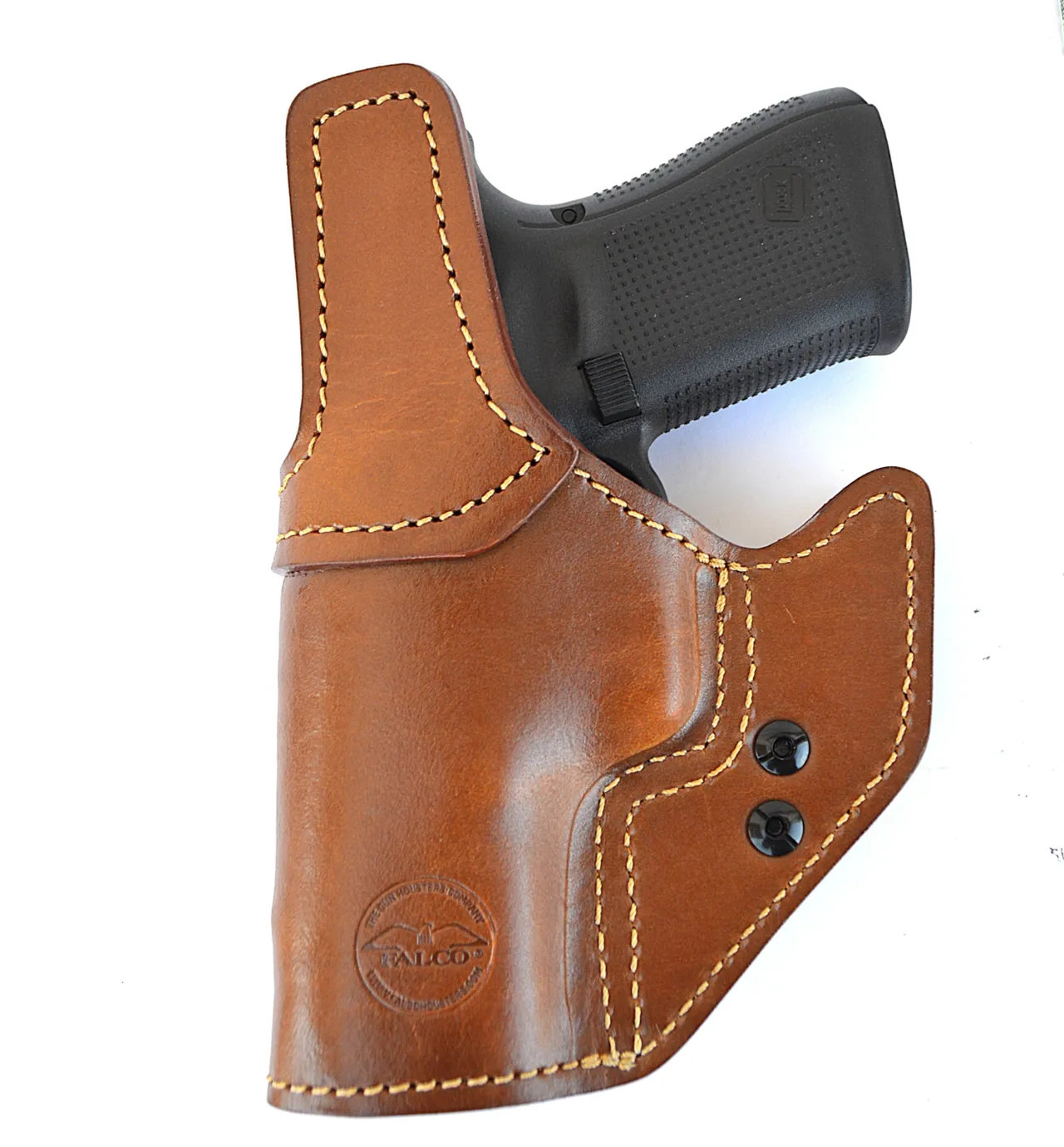
Falco holsters exhibit excellent stitching. Not the reinforced spine to the right of the image.
A Kydex holster is so rigid and well molded the holstering welt is especially strong. This is an advantage of Kydex. Most of us use both leather and Kydex holsters. A very few ballistics nylon holsters are suitable for concealed carry. Falco offers several of these affordable but useful nylon holsters.
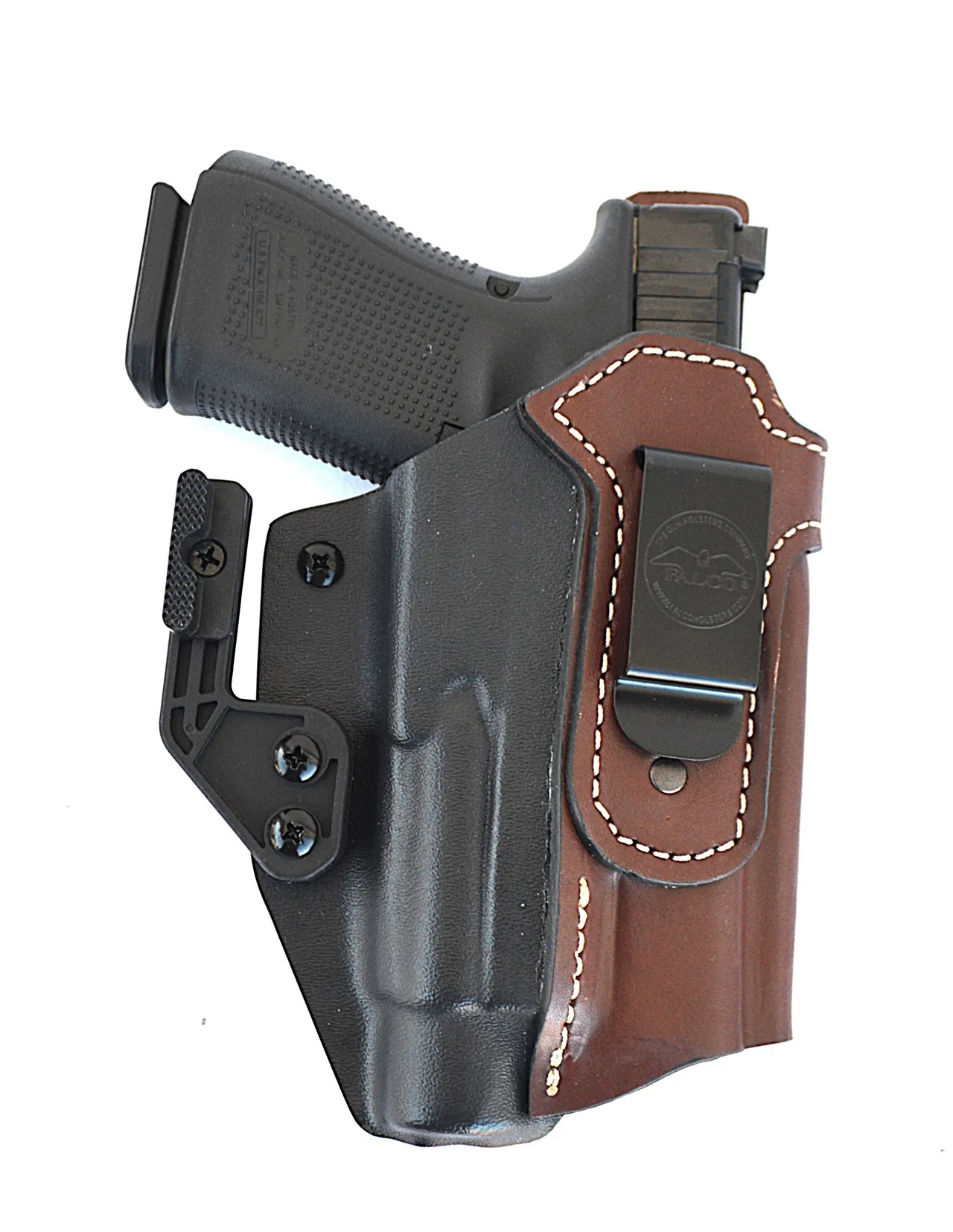
Only a very few makers offer top quality Kydex and leather holsters, known as Hybrids
Geometry
Leather holsters keep their fit and retain the handgun by a tight fit along the slide and triggerguard. A Kydex holster will retain the handgun by the muzzle and triggerguard. The holster shell may be open bottom or closed bottom. Most holsters feature a track that accommodates a tall pistol sight. Some are reinforced tunnels other are simply accommodating clefts molded into the holster body. Offset is a term used to describe how the holster rides on the body. There must be a balance of the holster riding close to the body while the holster also offers enough offset that the shooter is able to grasp the handle of the firearm securely on the draw. An on the belt holster has greater offset and the draw is sharper. An inside the waistband holster conceals better. Appendix holsters offer a natural draw, and many include a claw (wing) that presses against the belt to rotate the grip inward for better concealment.
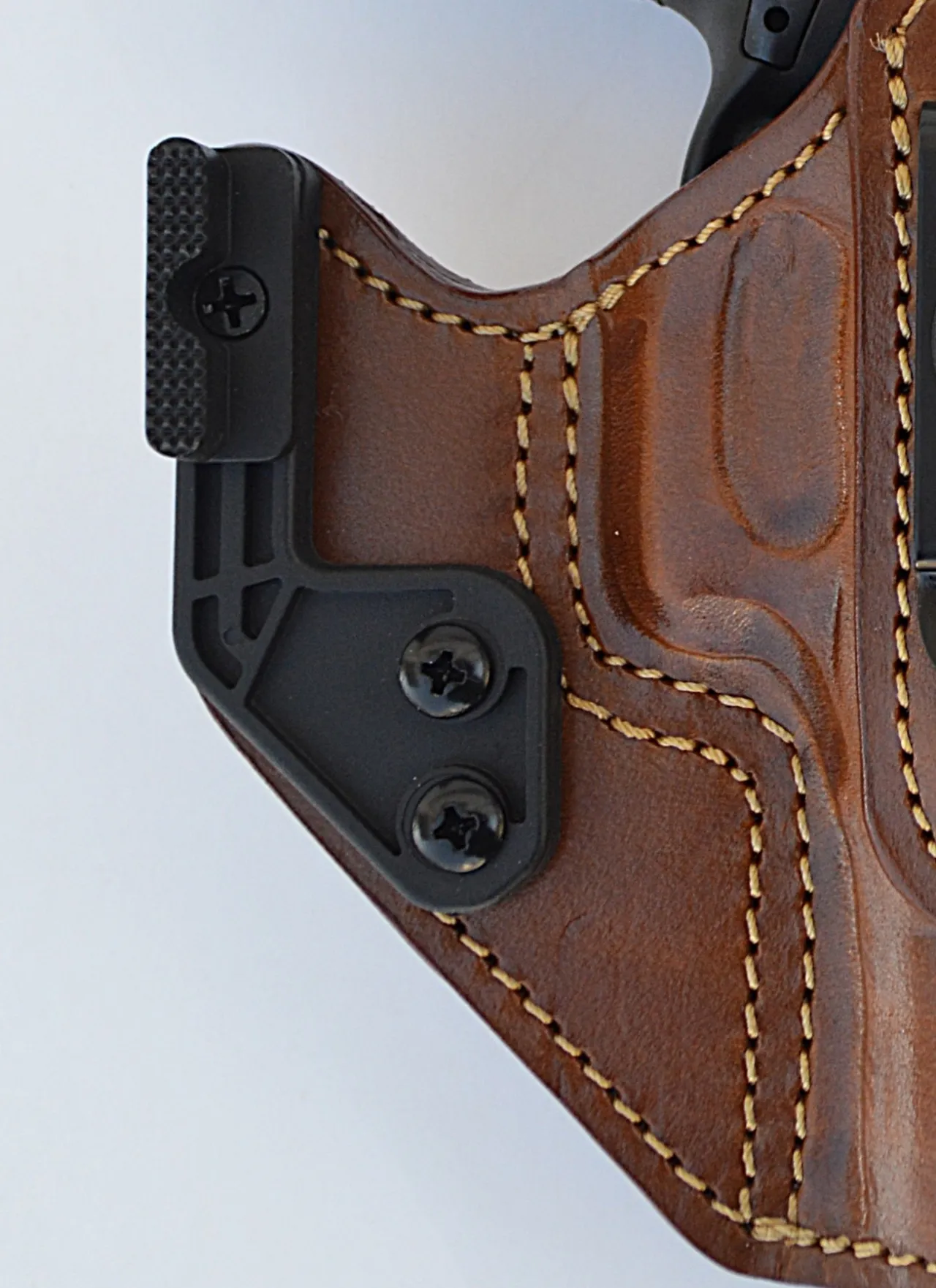
Appendix holsters may include a claw (wing) that presses against the belt to rotate the grip inward for better concealment
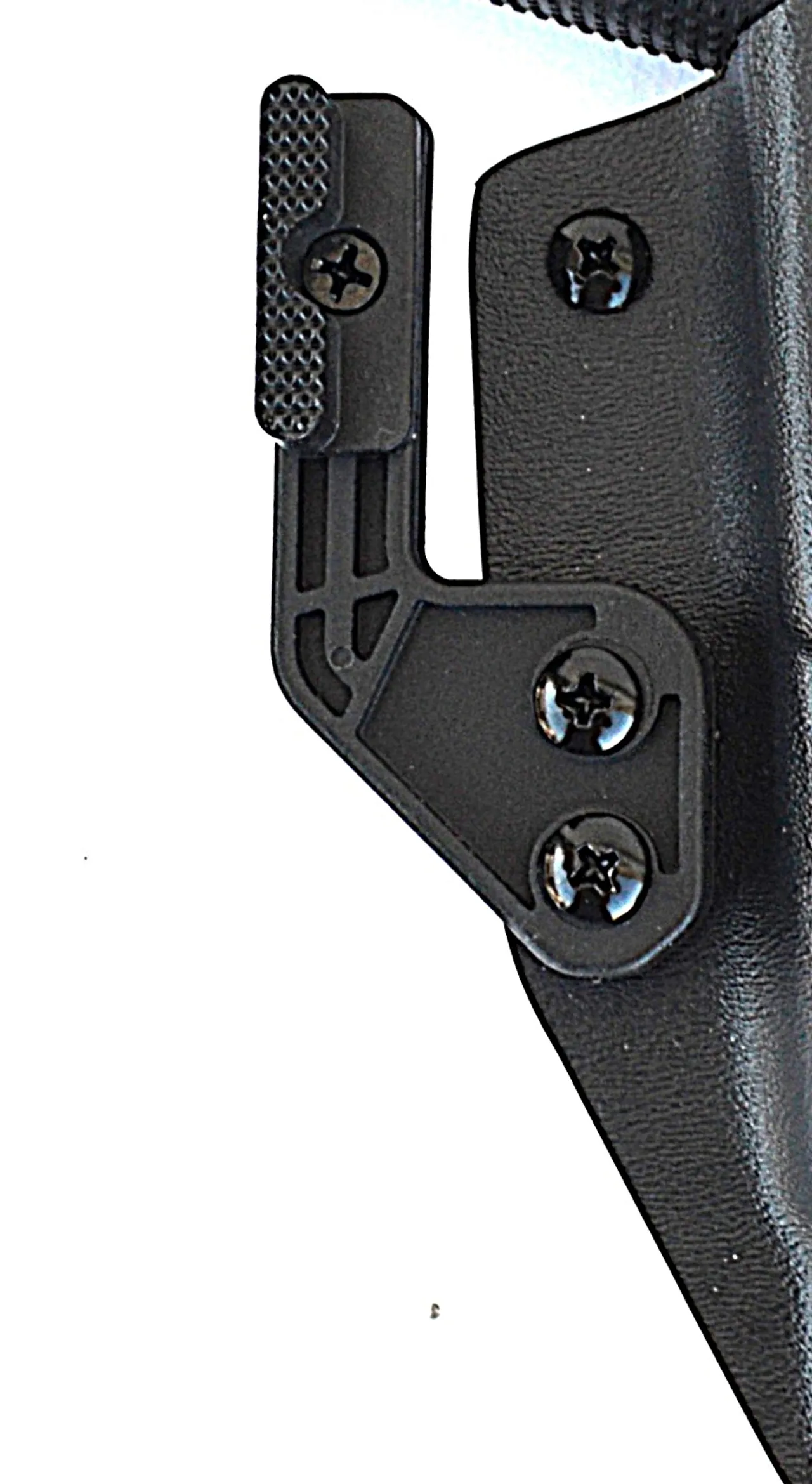
Claw on a hybrid holster. Reduces grip “printing” by leveraging the belt to rotate the handgun inward.
Other concerns- holstering belt loop width. The most common belt loop sizes are 1.5 or 2.0 inches. If you don’t have a sturdy gun belt then the holster will never be secure. A thick gun belt is essential! The drop or rid is simply the distance above or below the belt line. A high ride holster rides higher on the belt and allows a rapid draw action. When the holster features a low ride it is usually an inside the waistband holster that rides low in the pants for good concealment. Rake and cant are about the same things. Then the holster’s muzzle is behind the top of the slide as the pistol is in position and holsters this is rear rake. Only a very few competitors use a forward rake. The cant of the handgun may be measured in degrees. Most concealed carry holsters feature a 15 degree forward rake. This allows for the handgun to tilt forward and the shooter to draw into the presentation and get on target quickly. This is also called the draw angle may be expressed in degrees, as in ten degree or fifteen degree rear rake.
A final consideration is finish. Kydex is usually delivered in black. This is low key and workmanlike. Leather holsters may be tan brown or black. Falco’s Timeless holsters are superbly fitted and finishes with gorgeous tanning. Finish ensures the leather holsters survives exposure to the elements. I hope these descriptions help you in choosing the holster best suited for your needs. Falco holsters offers a wide choice and each is designed for a specific mission. Choose well!
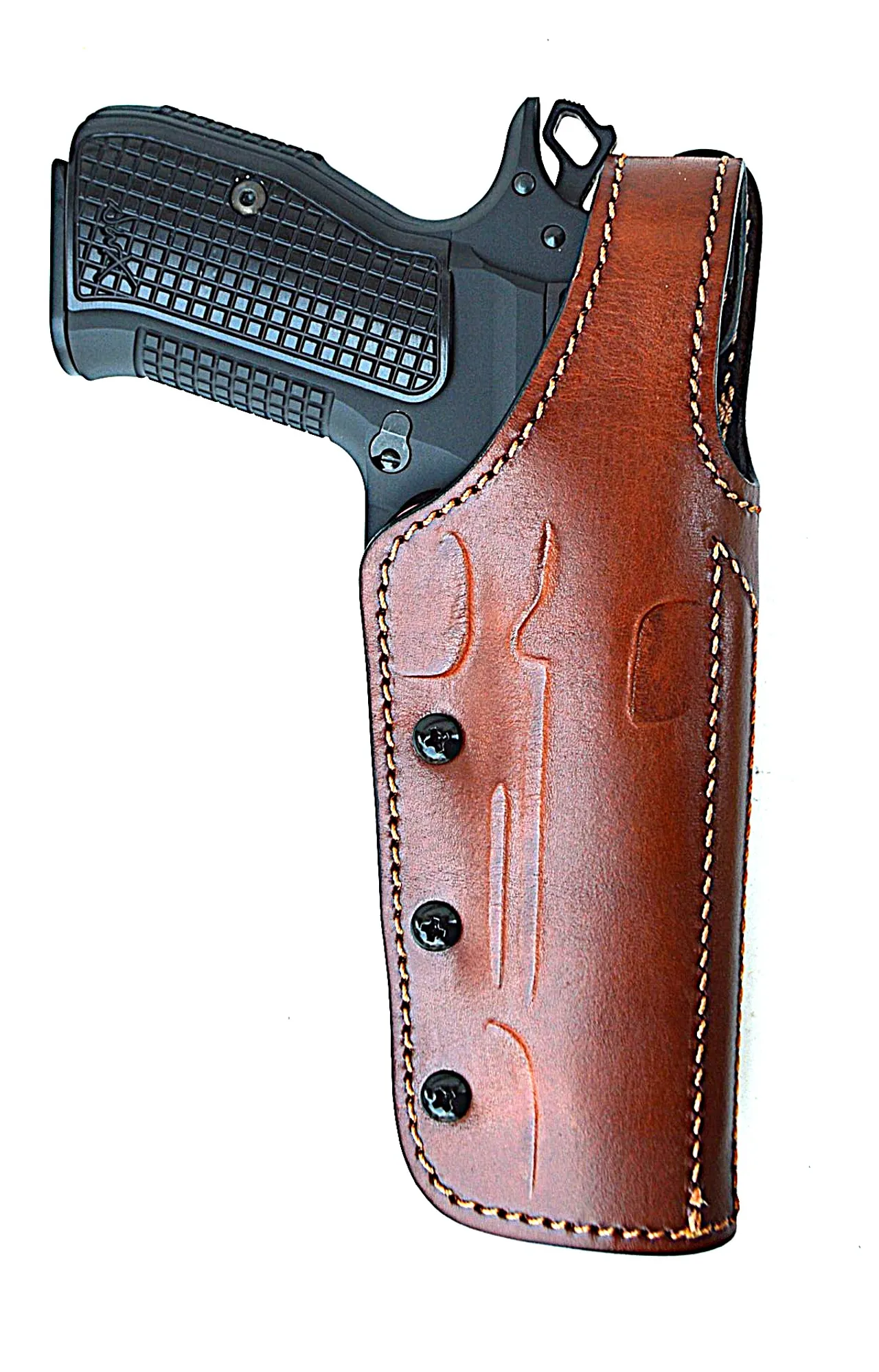
Falco offers an exceptionally well designed belt holster for 1911 type handguns. Most of the support is over the slide in this one. A thumbreak offers good security and the holster features retention screws.
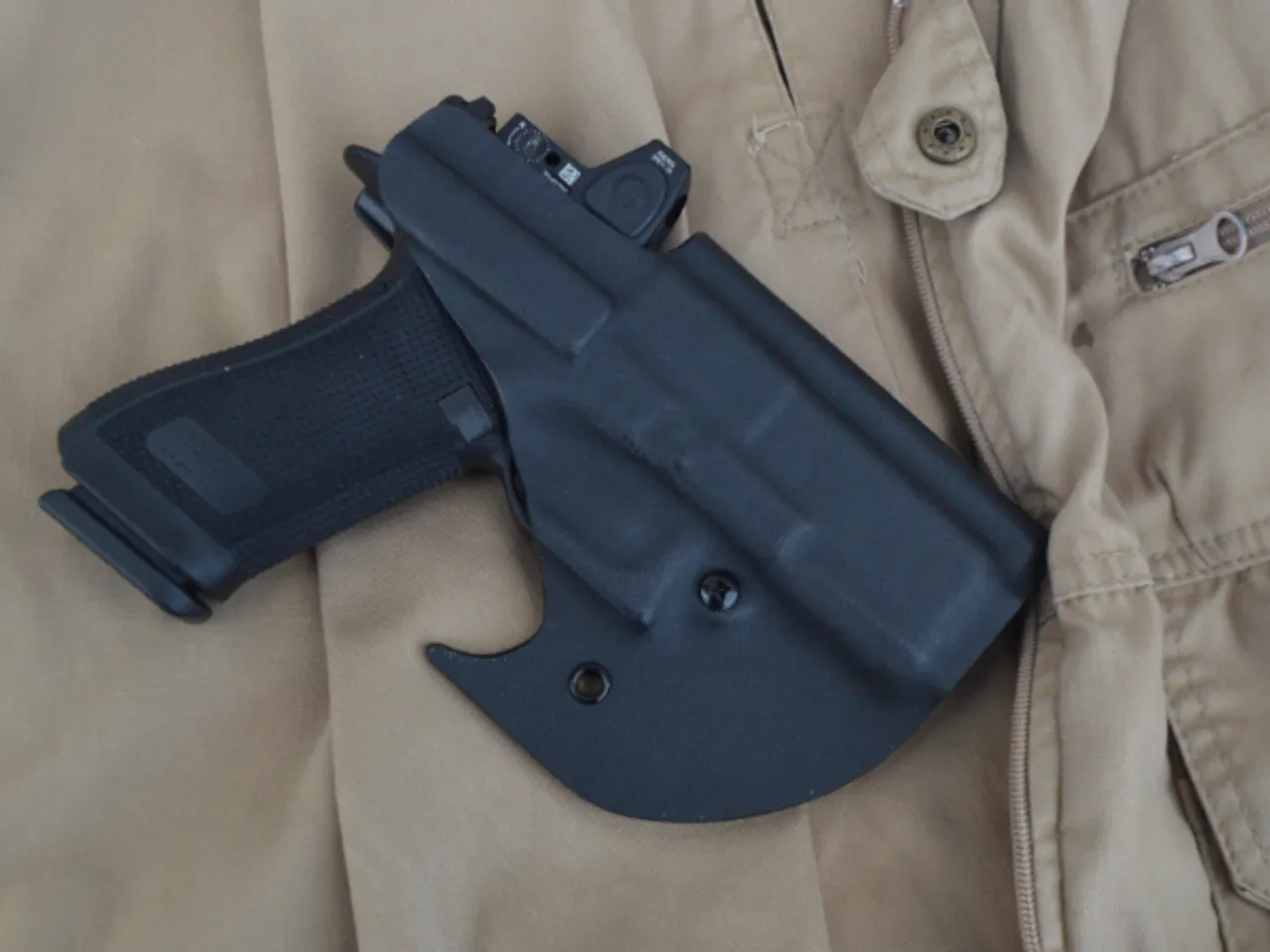
This pocket holster was ordered for the author’s Glock 19. This holster makes for secure carry but rapid access when worn in concealed carry vest.


Bob Campbell
4.3.2026


