HANDMADE CUSTOM-FIT HOLSTERS FOR ALMOST ANY GUN


.jpg&width=88&height=88&webp=1&type=cover)

.jpg&width=88&height=88&webp=1&type=cover)


.png&width=88&height=88&webp=1&type=cover)

.jpg&width=88&height=88&webp=1&type=cover)


.jpg&width=88&height=88&webp=1&type=cover)


What Is a Holster Claw?
If you've spent any time shopping for an IWB holster, you've probably seen "claw" listed as a feature and wondered what it actually does or whether you need it on your setup. It's one of those terms that gets thrown around so much in the concealed carry world that people either assume they already know what it does or write it off as another accessory tacked onto a holster listing to bump up the price. Simply put, a claw is a simple piece of hardware that solves a very specific, very common problem: the grip of your gun sticking out from your body enough that anyone paying attention can tell you're carrying. Today we’ll go over the concept of the claw, and where and when it's probably best to employ it in your EDC gear.
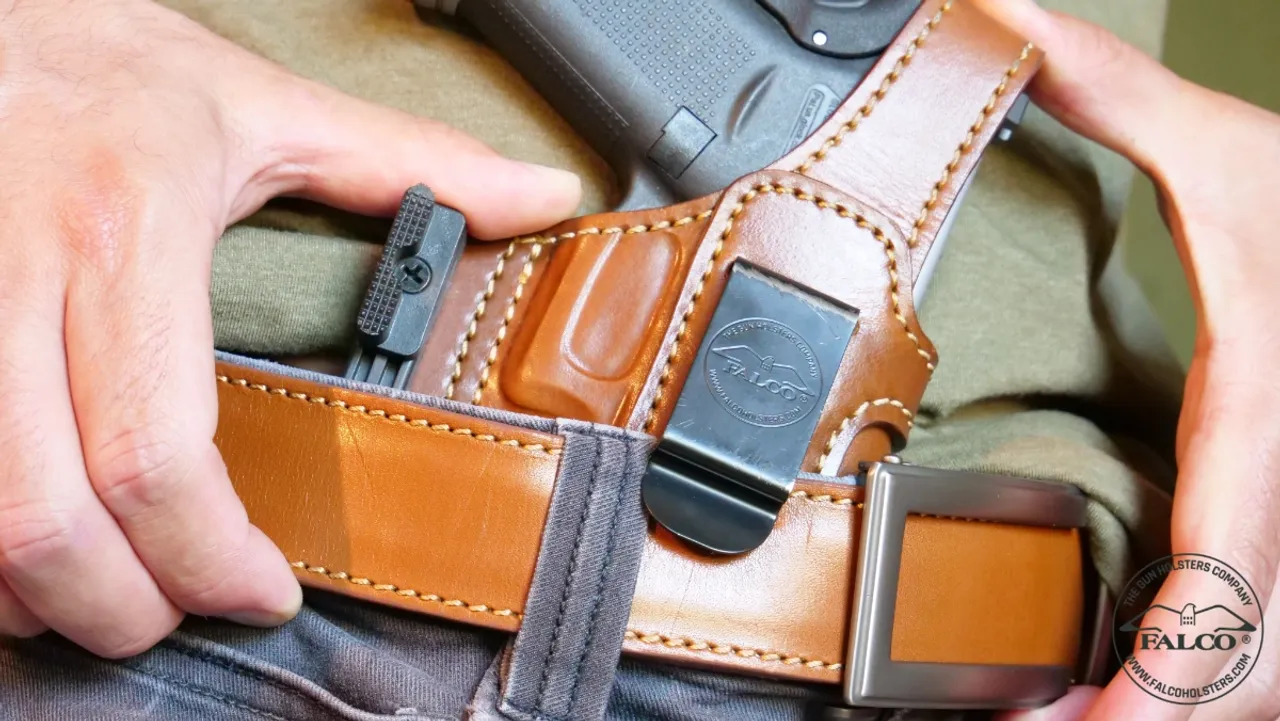
The Claw
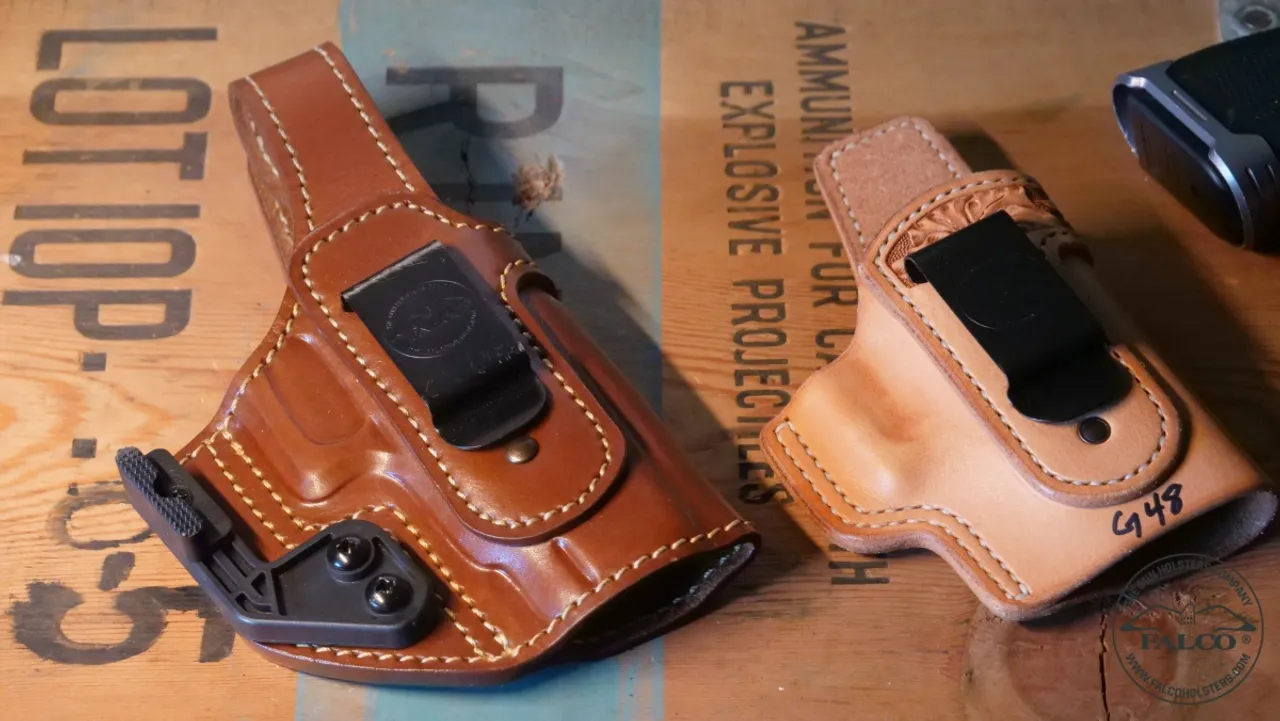
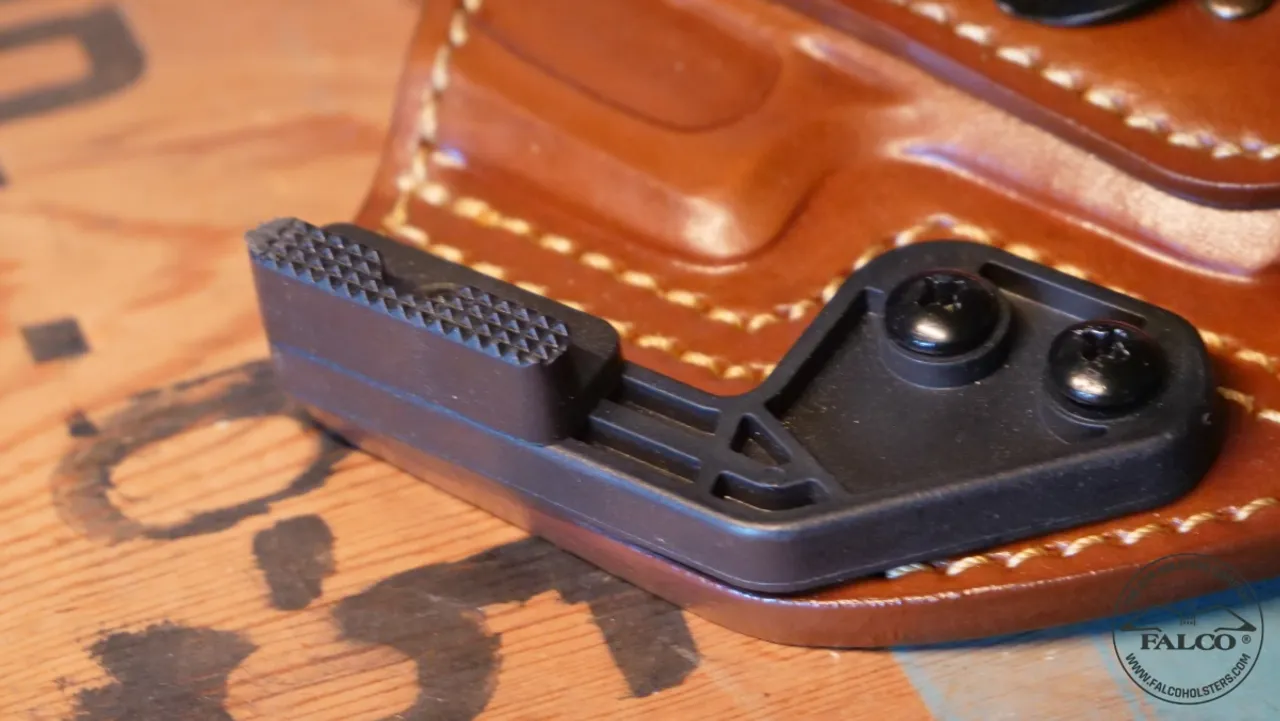
A holster claw is sometimes also called a wing or a concealment claw, depending on who's selling it. A claw typically mounts near the trigger guard on the same side as your belt clip, which is the case for nearly all of FALCO Holsters that feature a concealment claw, many of them pictured here. Once you have the holster on and your belt cinched down, the claw catches against the inside of your waistband and uses that tension as leverage. As the belt pushes against the claw, the bottom of the holster gets pulled outward slightly while the top, where the grip sits, gets pulled in toward your body. The net effect is that the grip rotates inward instead of standing straight up and away from you. This still has an effect even with less rigid belts, but it is much less pronounced than with a proper EDC belt.
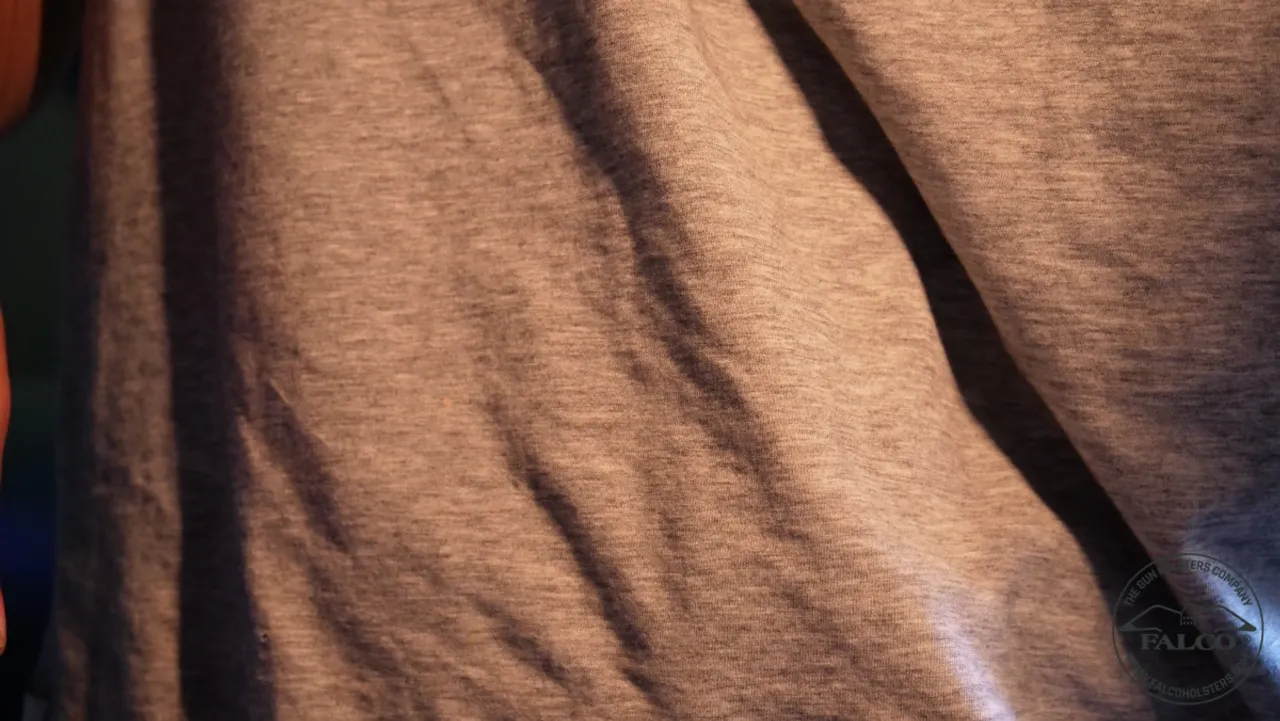
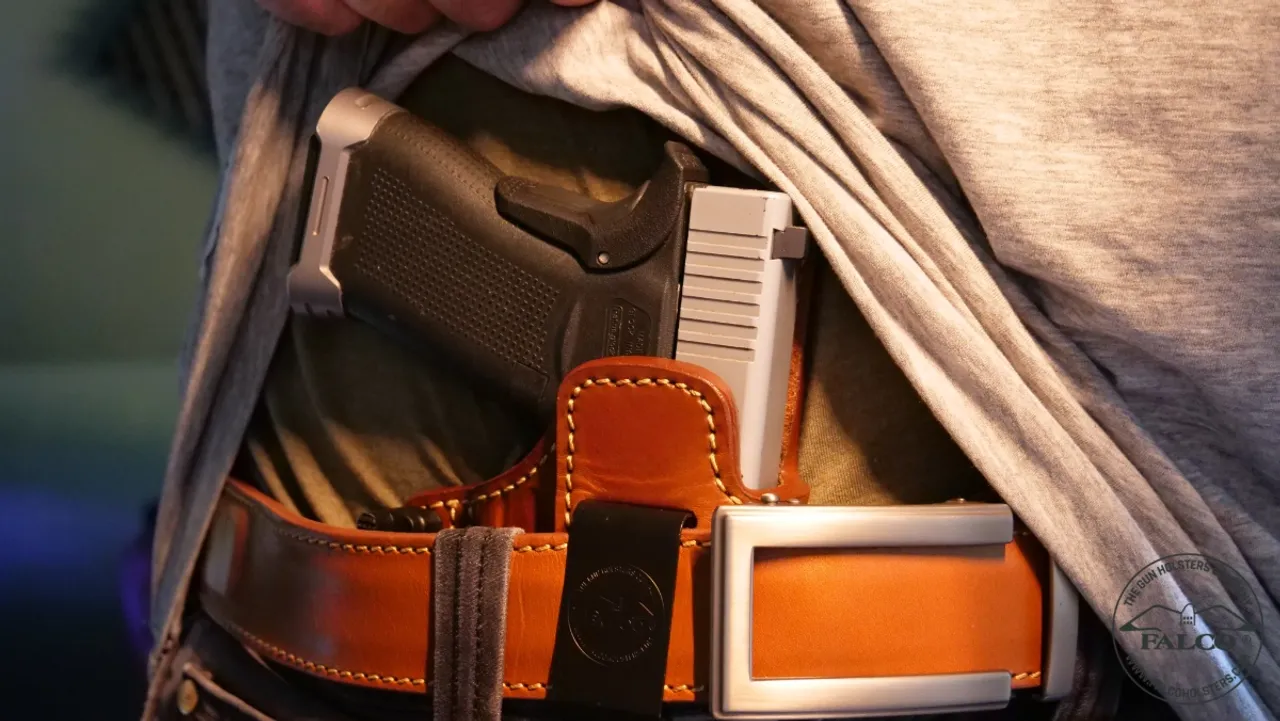
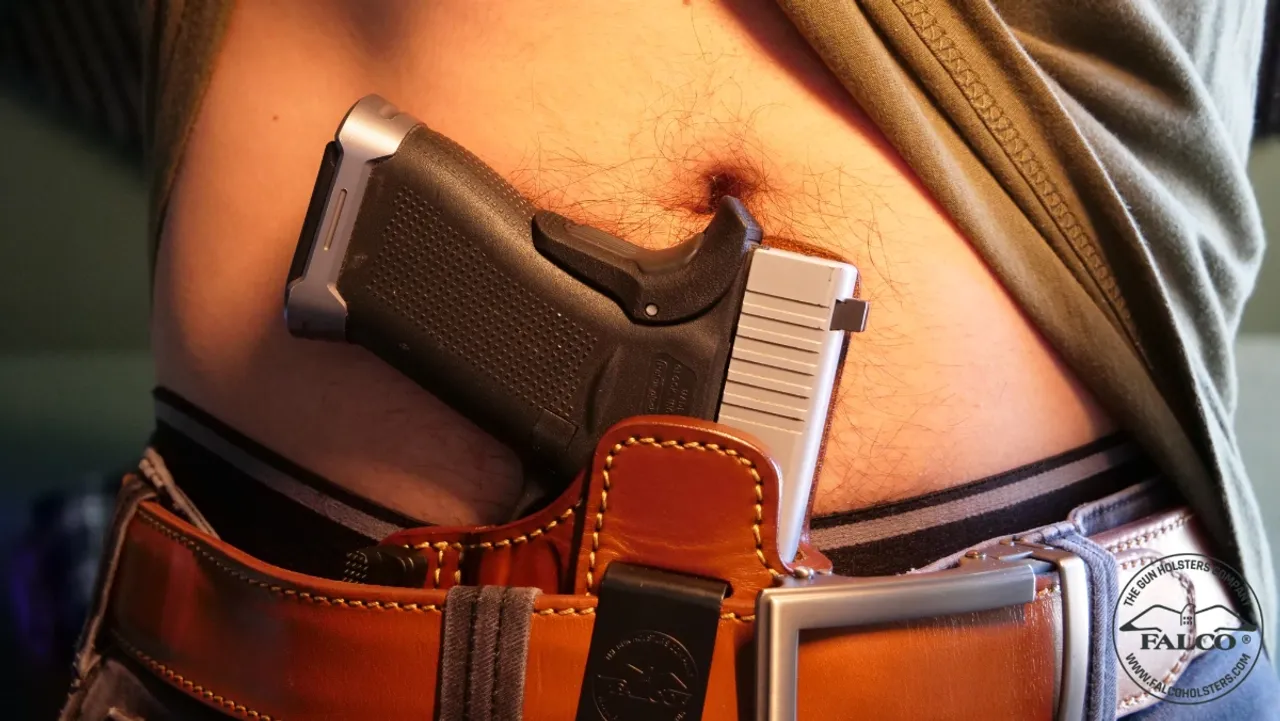
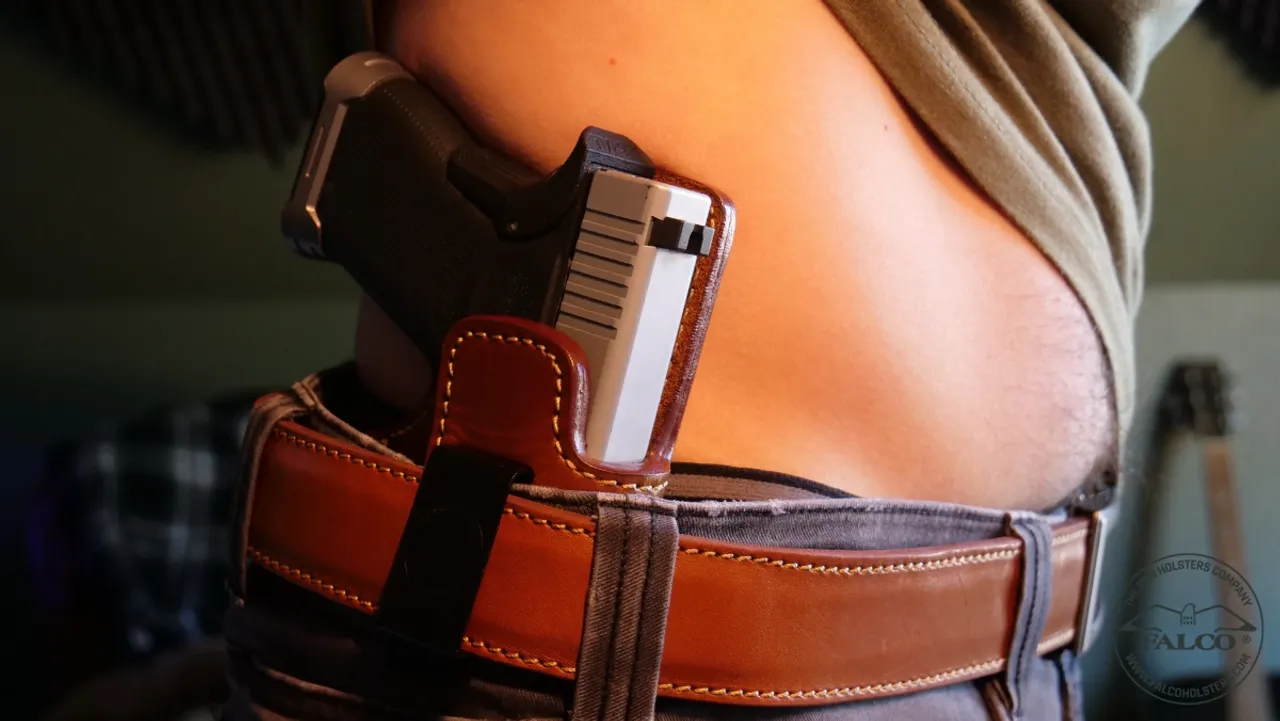
A lot of people new to concealed carry assume the slide or the muzzle is what gives away a concealed gun, but in reality it's almost always the top of the grip near the frame that prints first. The slide and most of the frame ride below your beltline, where your pants are already doing the concealing. The grip is the part sticking up above the belt with only a shirt or jacket standing between it and the world, so any daylight between the gun and your body up there is going to show. What makes it worse is that it is a straight object, and we as human beings have more of an elongated oval shape to us when you look from above. This is why a lot of us tend to gravitate towards appendix carry, as it is often the easiest way to conceal the length of a pistol's grip.
Tangible Benefits of The Claw
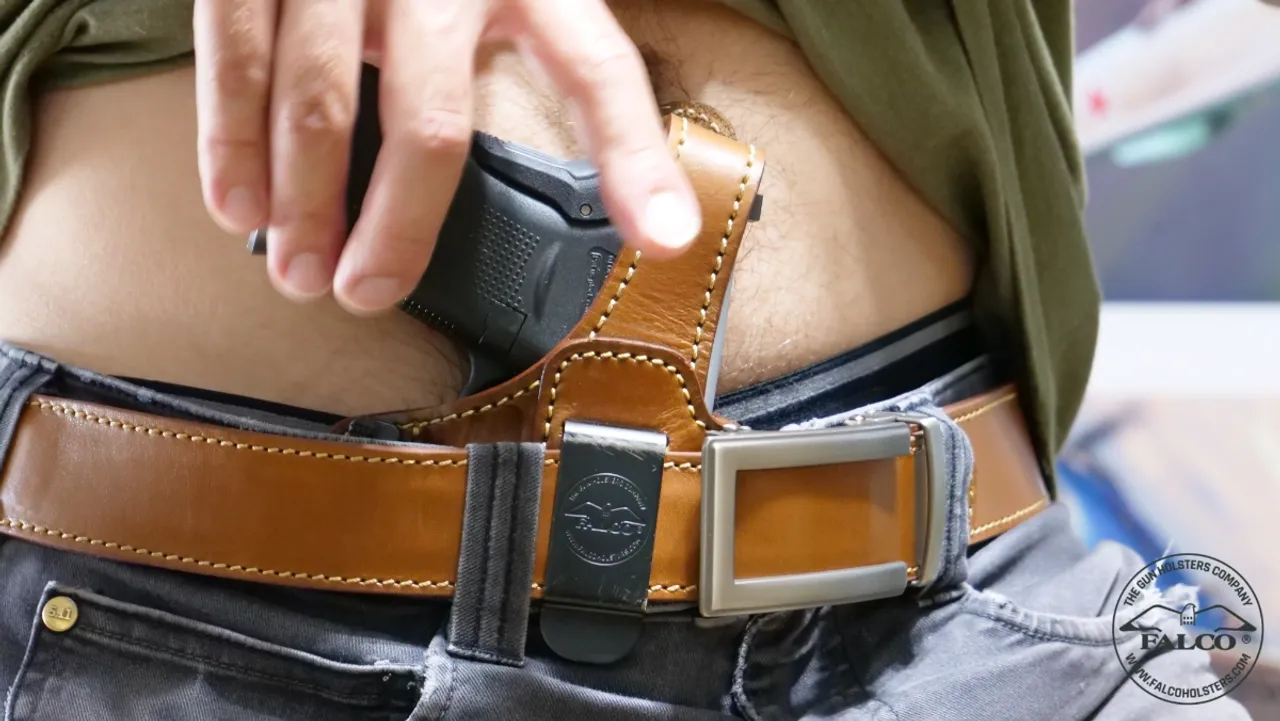
The most obvious benefit is less printing, but that has some real downstream effects worth mentioning. Because a claw lets you tuck a full-size grip in tighter, it opens the door to carrying a gun you might have otherwise sized down for concealment reasons. That matters if you want more capacity, a longer sight radius, or just a gun that fits your hand properly instead of a subcompact you're pinching three fingers around. Depending on your concealment garment options and the holsters available, the addition of a claw makes pistols even as large as the full-size Glock 17 print much less.
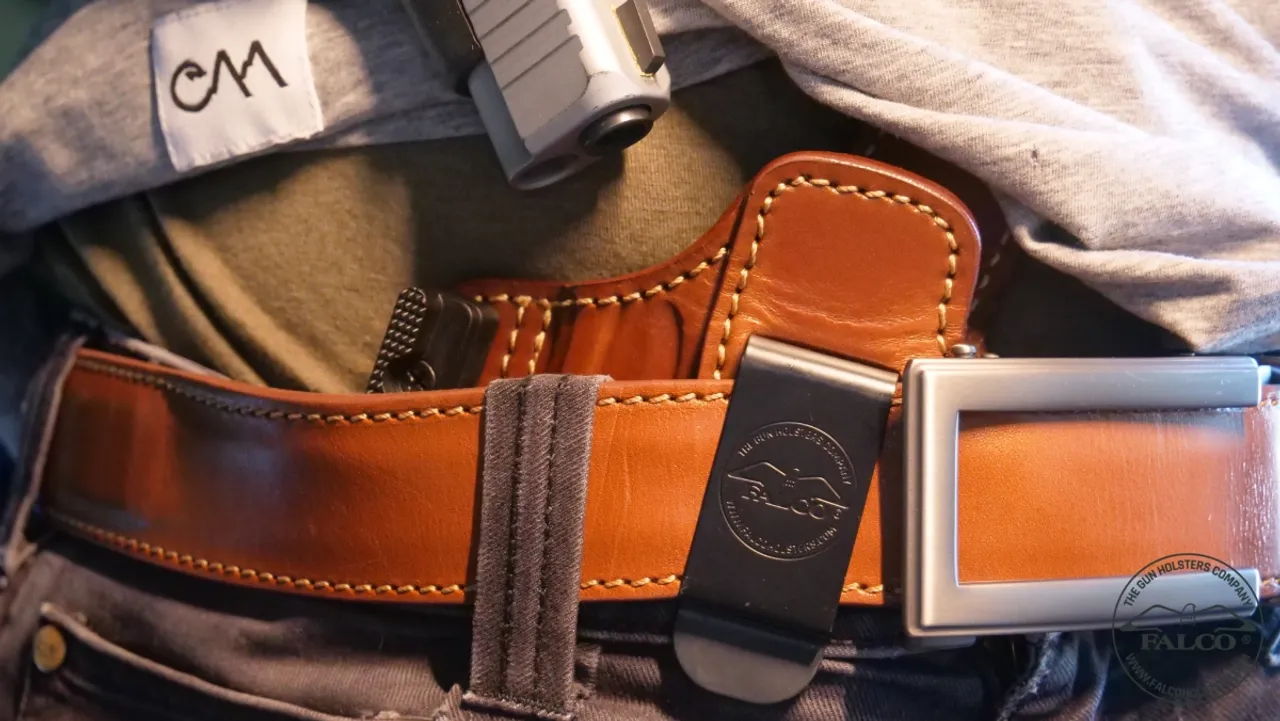
There's also a comfort argument that doesn't get talked about enough that I think is worth mentioning as well. A claw changes how the weight of the gun is distributed against your body. Instead of the grip levering outward and digging the bottom edge of the holster into your hip or ribs, the whole rig sits flatter and rides more evenly. A lot of people who add a claw to their setup report it feels more secure day to day, not just better concealed, since the added contact against the belt keeps the holster from shifting around as you move through a normal day and canting on your beltline leading to an unexpected orientation should you need to draw the pistol in an emergency.
Not Every Problem Is A Nail
None of this makes a claw a fix for every concealment problem, and this is where I think a lot of new carriers get it wrong: by only reading the marketing copy. As I alluded to earlier, a claw only works if there's something for it to lever against, which means it needs a stiff, properly sized gun belt. A soft dress belt or a stretchy waistband just flexes under the pressure instead of transferring it to the grip, and you end up with all the bulk of the claw and none of the benefit.
Position on the body matters just as much. A claw does the most work in the appendix position, from about twelve o'clock to two or two-thirty for a right-handed carrier, because that's where the waistband has the most consistent tension and the body has enough of a flat surface for the claw to press against. Move the same setup back toward three o'clock on the hip, and the geometry changes. That part of the body tends to curve more and has less meat over the hip bone, so instead of tucking the grip in, the claw can end up pressing uncomfortably without actually improving concealment much and arguably worsening your draw angle. It still works, and plenty of people carry with a claw at three to five o'clock without issue, but appendix is where the design really is most effective in my opinion. Much like you can’t fix everything with a hammer, you can’t fix every concealment problem with a holster claw.
Printing Is Bigger Than the Claw
A claw is one tool in a much bigger concealment picture, and treating it as the whole solution is how people end up disappointed. Printing comes from the combination of the gun, the holster, the belt, your clothing, and how all of those interact with your specific body shape, and the claw only addresses one very small link in that chain.
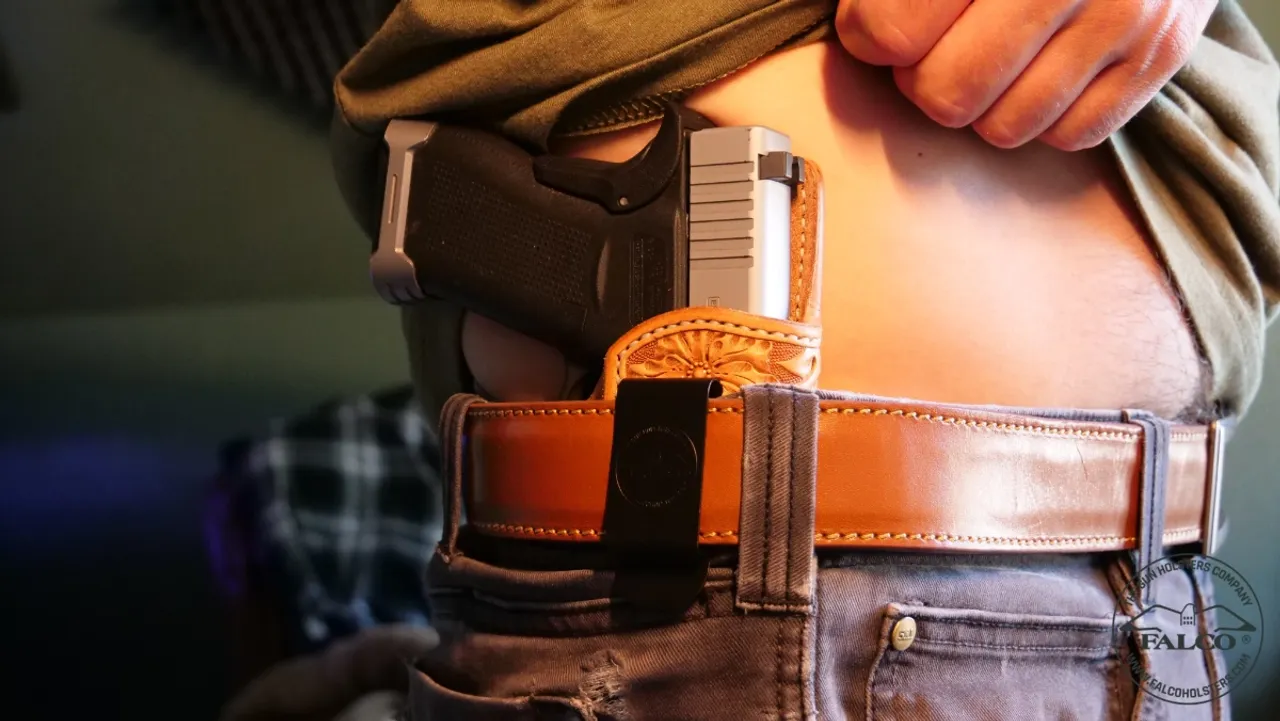
Your daily clothing or intentional concealment garment does as much heavy lifting as anything else. A claw can tuck the grip in nice and tight, but if you're wearing a thin, tight t-shirt, that little bit of grip still there is going to telegraph through the fabric regardless, even with something as small as the Bodyguard 2.0. A slightly looser shirt, a pattern that breaks up the outline, or a light over-shirt layered on top gives the claw's work somewhere to disappear into. This is also where weather and location come into play more than people want to admit. For me, carrying through an Oregon winter with a flannel and a jacket is a completely different concealment equation than carrying through August in a t-shirt, and your holster setup, claw included, has to account for that seasonal swing rather than assuming year-round conditions.
Where you're carrying matters too, not just legally but also practically; doing things like sitting for long stretches at a desk changes how a claw-equipped holster behaves compared to standing and moving around a job site, since your torso compresses and the geometry between belt, holster, and body shifts every time you sit down. A rig that conceals perfectly standing at the range can behave differently after you've been sitting in a truck or at a desk for a few hours, and that's true with or without a claw doing its job. Don’t forget to experiment and try things out at home before heading off to your daily routine with them, only to find out it's the most uncomfortable setup you’ve ever tried.
Final Thoughts
At the end of the day, I believe that a claw is one of those small pieces of hardware that is well worth the cash you’re paying to add one to your holster. FALCO has obviously made generous use of the claw feature by integrating it as a standard option in a lot of their IWB designs like the A912 and A907 rather than treating it as an aftermarket afterthought. If you're carrying strong side behind the hip with a slimmer gun and printing was never really an issue for you, you may not notice a huge difference either way, and that's fine too. The claw is a tool for a specific problem, not a mandatory upgrade for every carrier, but once you feel what a properly tuned one does for a full-size grip at the appendix position, it's hard to go back to carrying without one.


Luke Cuenco
21.7.2026


